7 min read
Aesthetic
1. Introduction
Markets move faster than ever, attention spans are shrinking, and creative cycles feel tougher each year. In this environment, brands that avoid AI won’t just move slower, they’ll gradually lose their edge. Staying competitive now requires smarter, faster, AI-powered systems.
2. What Does “Not Using AI” Really Mean Today?
Not using AI no longer means simply skipping new tools. It means relying only on manual workflows, making creative and media decisions without data support, and treating AI as a passing trend rather than core infrastructure. Meanwhile, your competitors are already integrating AI into concepting, planning, testing, and production, not as experiments, but as their new normal. Choosing not to adopt AI today is choosing to accept slower growth tomorrow.
3. How AI Changes the Pace of Brand Growth
AI reshapes how fast brands move. It speeds up content creation, concept generation, and decision-making, allowing teams to react to cultural trends in days instead of months. With AI, brands can run multiple tests at once and quickly double down on what works. This creates a widening gap: if one brand uses AI and another doesn’t, the speed gap becomes a growth gap. For deeper AI insights, explore our blog hub here: AI insights.
4. Core Risks of Ignoring AI
4.1. Slower Creative Cycles
Teams that avoid AI rely on longer production processes, more revisions, and slower approvals. Without AI-supported drafts or variations, timelines stretch. Learn more about increasing creative speed.
4.2. Higher Operational Costs
Manual production means more external shoots, freelancers, and agencies, all adding up to a higher cost per campaign. AI reduces these burdens by generating visuals, concepts, and edits internally.
4.3. Weaker Market Responsiveness
Trends move too quickly for slow systems. Without AI, brands struggle to create, test, and publish content at the pace audiences expect.
4.4. Missed Insights From Data
AI helps reveal patterns in behavior, performance, and preferences. Without it, teams rely on intuition, increasing the risk of expensive missteps.
4.5. Fading Relevance With Younger Audiences
Younger consumers expect freshness and experimentation. Brands that stick to old, rigid workflows appear outdated, slow, and disconnected.
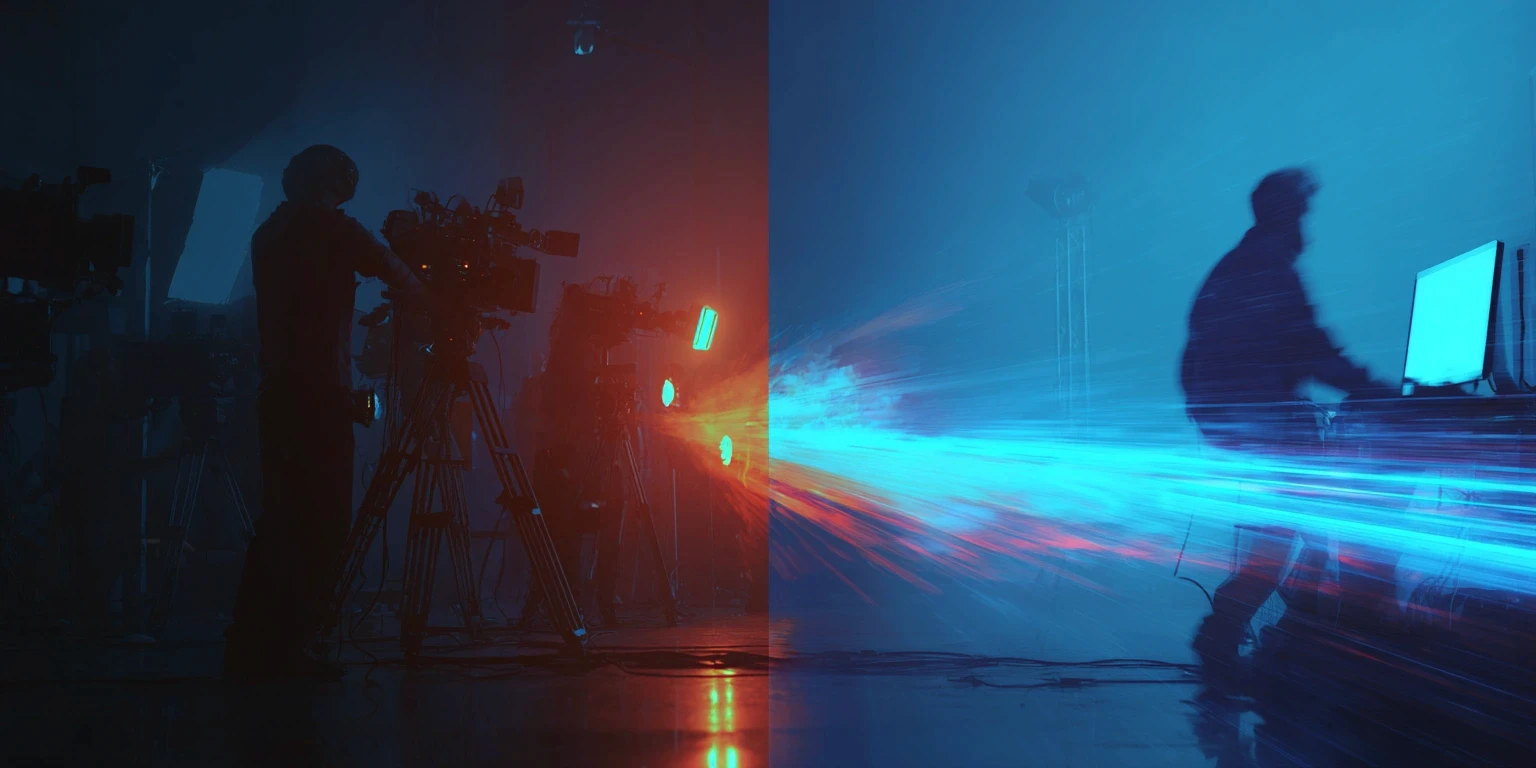
6. AI vs. Traditional Filmmaking: Key Differences
6.1 Budget & Resource Requirements
Traditional filmmaking needs locations, models, cameras, lighting, and teams. AI filmmaking requ
8. Tools and Technologies AI Filmmakers Use
8.1 Generative Video Models
These models create raw scenes, motion, and storytelling moments.
8.2 AI Editing & Post-Production Tools
Automated color grading, timing, pacing, retouching, and transitions.
8.3 Motion Capture + Simulation Systems
Used for movement, fabric flow, and dynamic action. The Kinetic Energy collection shows how detailed AI motion can feel.
8.4 Sound, Music & Voice AI Tools
AI adds soundtracks, effects, and natural voiceovers that match the film’s mood.
9. Challenges & Limitations of AI Filmmaking
9.1 Product Accuracy Issues
Some materials, textures, or patterns may require fine-tuning.
9.2 Model Limitations for Complex Motion
Fast movement, sharp turns, or intricate poses sometimes need manual correction.
9.3 Consistency Across Shots
AI films can generate variations unexpectedly; skilled editing keeps everything aligned.
9.4 Copyright & Licensing Questions
Brands must ensure they own the rights to AI-generated content and avoid using restricted datasets.
10. The Future of AI Filmmakers
AI filmmaking is moving toward real-time video generation, hyper-realistic characters, and smoother motion. As models evolve, brands will blend AI with traditional shoots, creating hybrid campaigns that combine physical and digital artistry.
Future AI video ads will feel indistinguishable from high-budget productions, yet be delivered in days. Studios like byarnab are already pushing toward this vision, helping brands create faster and scale content ecosystems across all platforms.
11. How Fashion Brands Can Integrate AI Filmmakers Today
11.1 Start With Small Campaigns
Begin with short ads or teaser films to understand the workflow.
11.2 Create Look books or Ad Concepts Before Production
Use AI to test styles and aesthetics before investing in larger campaigns.
11.3 Test Different Storylines Fast
AI lets brands experiment with narrative angles quickly and cheaply.
11.4 Use AI Films to Reduce Photoshoot Costs
Supplement physical shoots with AI scenes to save time and resources.
11.5 Build a Scalable Visual Pipeline
AI filmmaking helps brands maintain consistent content output.
For collaborations or custom AI campaigns, you can contact us to explore possibilities.
12. Frequently Asked Questions
12.1 How accurate are AI films for product-focused brands?
With the right studio, accuracy is strong. Manual refinements ensure details match your product.
12.2 How long does an AI-generated film take to create?
Between few days and a week, depending on complexity and video length.
12.3 Do AI films work for premium or luxury brands?
Yes. Many AI films reach cinematic quality suitable for high-end campaigns.
12.4 What is the cost range for AI filmmaking?
Costs vary, but AI films are typically far more affordable than traditional production and far more expensive than AI images.
12.5 Can AI filmmakers match my brand’s visual identity?
Yes, consistent direction and brand guidelines help maintain your aesthetic.
12.6 Is AI filmmaking suitable for long-format videos?
Short-format is ideal, but longer videos are becoming more possible as models evolve.
Next blog